Here at Convergent Care Collective, we try to do a little reading from time to time. Between e-mails, feeding the dogs and/or children and grant deadlines, books, particularly ones that encourage us in our mission as not-for-profits, can be restorative and grounding. That is how I felt recently when I read “Abundance” by Ezra Klein and Derek Thompson. I may not agree with every argument or every example but I felt a resonance in our mission at CCC. The authors cite an example of how much time scientists and non-profits spend writing grants and filling out reports to access government funding. They equate it to “a chronic fatigue syndrome” taking out the brightest minds in science and programs for about half the year. But instead of illness, they are battling administrative duties. Of course, part of the proposed solution is to lower the barriers by removing all the regulatory constraints but another solution is getting more efficient. That is what we strive to do at CCC. Where it would take a small non-profit 80 hours to write a grant, we can do it in 35 so you can focus on your programs. Where it would take a medium-sized clinic 25 hours per month to report encounter data, we can automate it without paying your EHR the equivalent of a comfortable-sized home down payment so you can focus on patient care.
At Convergent Care Collective, we’ve come to realize that most nonprofits aren’t struggling because of a lack of passion or purpose. They’re struggling because there are only 24 hours in a day, and half of those are already spoken for by things that have nothing to do with why they got into this work in the first place. We see it all the time: an executive director juggling a dozen grants, a clinic manager buried under reporting deadlines, or a project lead trying to decipher another federal portal password reset email. It’s not that the work itself is the problem, it’s that the system makes it so hard to do the work.
That’s what motivates us at CCC. We want to make the work lighter. Not in the sense of pretending it’s easy (because it’s not…hello fourth cup of coffee at my dining room table as I write this) but by helping organizations find a rhythm again. We’ve seen how powerful it can be when people have the breathing room to step back and think, “Wait, why did we start this program in the first place?” or “How can we make this actually work for the community?” Those moments of reflection and creativity are rare gifts in the nonprofit world, and they often get lost under piles of paperwork.
When we help with grant writing or data reporting, it’s never just about checking a box or meeting a deadline. It’s about creating space for those moments. If we can take something that normally takes you 80 hours and shrink it down to 35, that’s 45 hours back in your week for something that actually matters—whether that’s visiting a program site, calling a partner, or just catching your breath.
And when it comes to data, we’ve learned that it’s not just numbers, it’s stories. Every data point represents a person who showed up, a service delivered, a barrier broken. When nonprofits have the right tools to collect and understand that data, it can change the conversation. Instead of scrambling to prove impact, you can show it naturally, with confidence. You can look at your outcomes and say, “Here’s where we’re making a difference,” or “Here’s where we can do better.” That’s the kind of information that strengthens programs and deepens trust with funders and the community.
We also talk a lot about balance. Nonprofits operate in this constant tension between serving the mission and surviving the system. Our work is about easing that tension, even just a little. We know there’s no one-size-fits-all fix (every organization has its quirks and constraints) but we try to meet people where they are. Sometimes that means helping a team organize their grants calendar. Sometimes it means automating reports that used to take days. And sometimes it just means listening and brainstorming together until the next step feels a little clearer.
Ultimately, we believe the nonprofit world is full of abundance… and care, creativity, and commitment. What’s missing isn’t effort or intention; it’s capacity. If we can help restore a little of that, if we can give people the time and tools to focus on their communities instead of their inboxes, then we’re doing what we set out to do.
Because at the end of the day, we’re all trying to make things a little better: for our neighbors, our networks, and the world around us. And if we can make that process just a little more efficient, maybe we can all breathe a little easier while we do it.
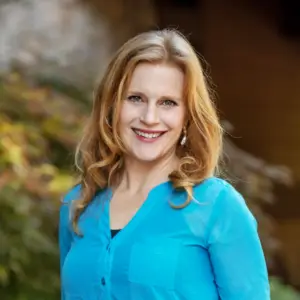
Rachel Blanton
Rachel Harris Blanton is a dedicated public health professional and consultant based in Fort Collins, CO. With a Master of Health Administration from Colorado State University, Rachel has built a distinguished career focusing on healthcare transformation, community health initiatives, and grant management. Her expertise spans collaborative development, strategic planning, project evaluation, and human-centered design, making her a pivotal figure in advancing healthcare models across rural communities. Rachel's commitment to advancing public health is underscored by her leadership roles in various consortia and her advocacy for innovative healthcare solutions in rural and underserved communities. She continues to drive impactful change through her consulting work and active involvement in healthcare innovation networks.